[ad_1]
President Gustavo Petro expressed his plan to raise the legal monthly minimum wage in Colombia, questioning the entrepreneurs’ proposed increase and comparing their suggested percentage to other state charges that, in his view, are significantly higher. During the Police National promotion ceremony, he highlighted the lack of agreement between unions and employers regarding the final percentage of the wage adjustment, in light of the healthcare crisis and ongoing social inequality.
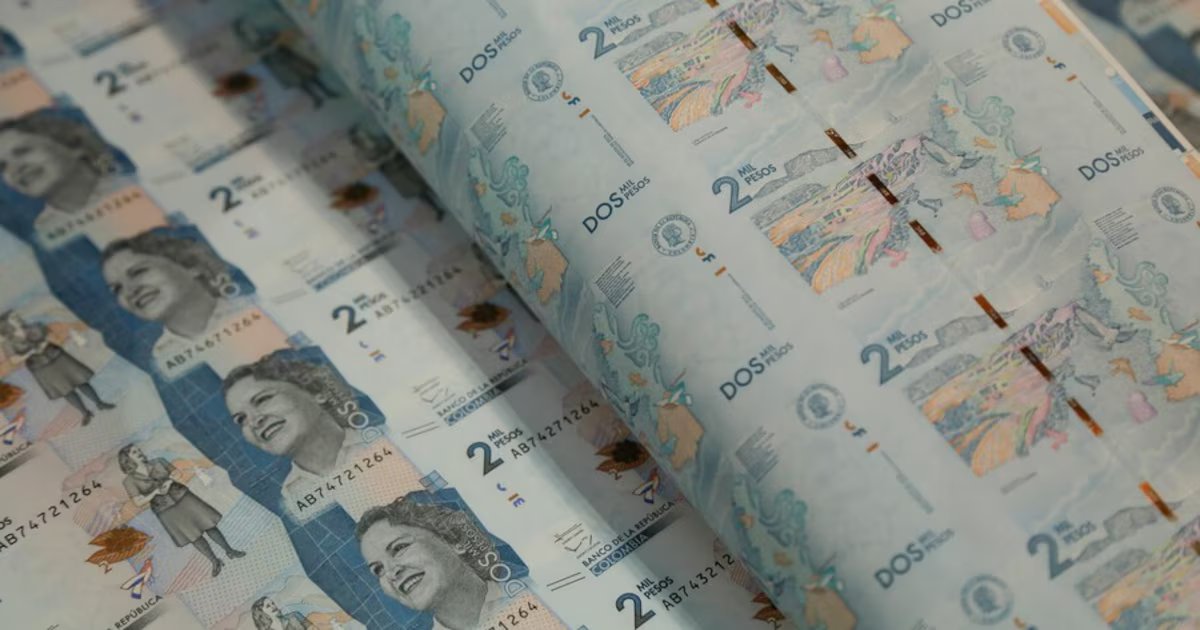
“Today I intend to raise, but they cannot sincerely explain to me why workers are only asked to increase by 7%, while owners of rental capital benefiting from the State charge the State 13%, and for health, it’s 17%,” asserted the President, who has been advocating for an 11% increase for several weeks, which would bring the compensation closer to $1,580,000.
Now you can follow us on Facebook and our WhatsApp Channel.
He insisted that the differential percentages reveal a disparity in public resource distribution and criticized that while a modest increase for workers is being debated, other economic actors are receiving higher increments.

Regarding the minimum wage negotiations, the consensus table among unions, employers, and the Government did not reach an agreement in the first stage, which concluded on December 15. The unions proposed a 16% increase for minimum wage and transportation assistance, while the employers suggested a 7.21% increase, which is less than half of the figure supported by the workers.
Naturally, the significant gap between the parties suggests that, as has been the case for most of the last fifteen years, the Government may set the increase by decree due to the lack of consensus.
At the same time, Labor Minister Antonio Sanguino confirmed that the session of the consensus table ended without agreement and explained that “the sectors, the labor organizations, insisted that the increase be in double digits to open discussions about that percentage”, while the employers maintained their position of 7.21%.

Sanguino detailed that a period of 48 hours will now open for both parties to present their remarks and opinions to the Ministry of Labor, after which it will be decided whether to enable new dialogue spaces or if the minimum wage will be issued directly via presidential decree. He also stated that there must be a fair and responsible decision considering public finances and the overall favorable macroeconomic environment that must be preserved.
The minister acknowledged that efforts will continue and that if there are no other options but to issue the increase by decree, “we will do so with a sense of justice and responsibility.”
Additionally, Petro announced specific measures for police aides, who starting January 1, 2026, will receive the current legal monthly minimum wage (currently at $1,423,500).
“We have thus doubled the monthly bonus payment to the aides and starting next year, on January 1, in just a few days, they will receive that legal monthly minimum wage that I intend to raise,” he stated, highlighting the need to improve the economic conditions of those performing essential roles for public safety and social welfare.
The social and economic context in which this negotiation is taking place is challenging.
While monetary poverty has decreased, in 2025 it still affects 31.8% of the national population and 42.5% in rural areas, where many families lack sufficient income to cover a basic basket. Given these circumstances, the discussion surrounding the minimum wage becomes particularly significant since the wage adjustment is perceived as a crucial tool to enhance worker incomes and reduce the poverty gap.
[ad_2]