[ad_1]

Gustavo Petro’s government is facing one of its most severe crises, with less than 230 days remaining in his term, following the arrest of two of his former ministers, Luis Fernando Velasco and Ricardo Bonilla, accused of leading a corruption network that allegedly diverted over 612 billion pesos of public funds from the National Unit for Disaster Risk Management (Ungrd) and other state bodies.
According to the prosecution’s investigation, between May 2023 and February 2024, Velasco, former Minister of the Interior, and Bonilla, former Minister of Finance, led a criminal organization that misappropriated public funds through the Ungrd and the National Road Institute (Invías). These funds were allegedly used to “purchase” the support of at least 10 legislators in Congress, aiming to ensure the approval of the Executive’s structural reforms.
Now you can follow us on Facebook and on our WhatsApp Channel

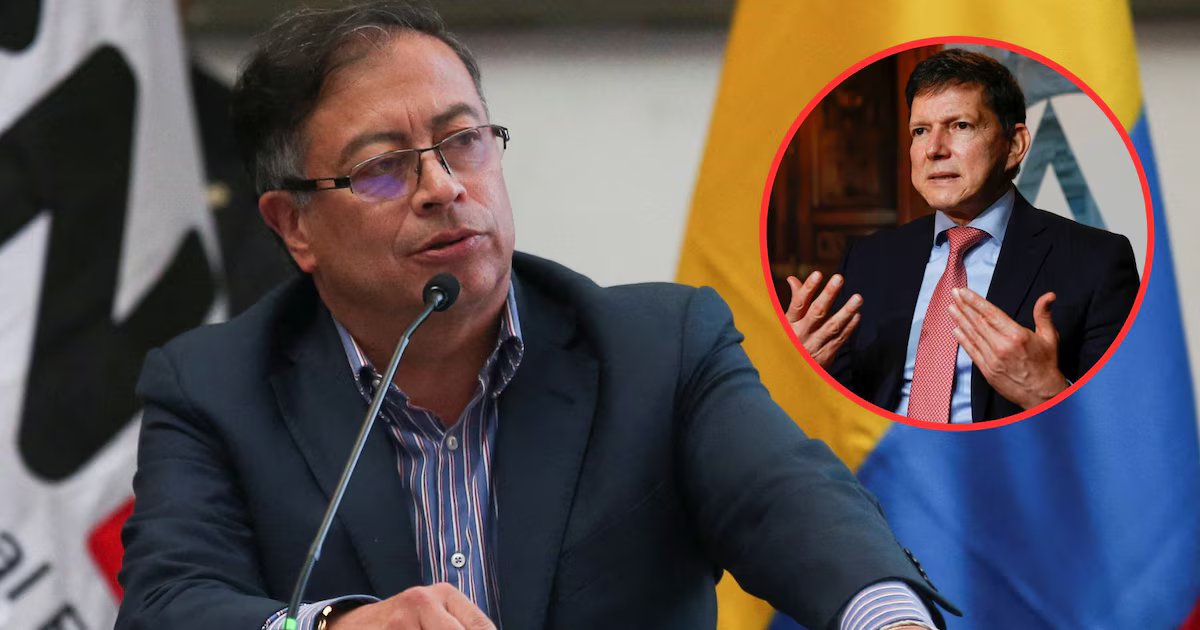
In this context, Wilson Ruiz, former Minister of Justice and now a Senate candidate for the National Salvation party, has seized the opportunity created by the arrests of Petro’s former team members to summarize what he perceives as the current administration’s performance: fostering significant debate on social media regarding the politicization of legal processes, just before the 2026 electoral process.
“The ‘Government of Change’ has traded ministers for inmates. Now Petro is trying to protect them because he knows that when they all fall, he will be next. Colombia can’t tolerate more corruption disguised as the ‘change’ promised by the left. Let’s save Colombia!” Ruiz stated publicly, in light of the events involving key cabinet figures and the implications for institutional integrity and his promise of political renewal within the country.

The unlawful mechanism described by the investigating authority indicated that Bonilla, as the budget manager, ensured funding for the so-called “indicative slots”, while Velasco politically managed the legislators. The charges against them include conspiracy to commit aggravated crimes, undue interest in the awarding of contracts, and bribery; both former ministers have denied the charges and declared their innocence.
The judicial process escalated on December 18, when magistrate Aura Alexandra Rosero of the Bogotá Superior Court imposed preventive detention on the former ministers. This decision was based on the severity of the facts and the institutional risk, as the magistrate concluded that house arrest would be insufficient to prevent potential interference in the ongoing investigation against both ex-officials.
On the other hand, the arrests were legitimized on December 19, when Bonilla was detained at the National Police’s Center for Higher Studies (Cespo) in Bogotá, while Velasco voluntarily surrendered in Cali and was taken to the Carabineros School in the Valle del Cauca capital. During the hearing, Bonilla stated that he suffered from ischemia, a fact that did not change the judicial decision; this has fueled controversy regarding his health condition.

This case, which is part of the Ungrd’s web of corruption, was brought to light by revelations from Olmedo López, the former director of the organization, and his deputy Sneyder Pinilla, and is currently in the appeal stage: with the defense teams of the former ministers seeking to overturn the preventive detention. The process is expected to continue in January 2026, as the investigation unfolds and expands to include over 10 legislators and other high-ranking officials involved.
Regarding this case, President Gustavo Petro’s reaction has been strong. The president defended his ex-ministers and questioned the actions of magistrate Rosero, whom he accused of insensitivity and exceeding the requests of the parties. He stated that, unlike other cases, the magistrate did not consider Bonilla’s severe illness nor allowed the defense to be fully heard during the ongoing hearings.
“The people of work and knowledge are being humiliated and are victims of vengeance, just for helping the people,” declared the head of state: the same individual who previously criticized corrupt practices from other administrations, yet now encourages economics students to voice their opinions on what he perceives as a criminalization of differing intellectual stances within political discourse, all while substantial evidence against the ex-officials continues to mount.
[ad_2]