[ad_1]
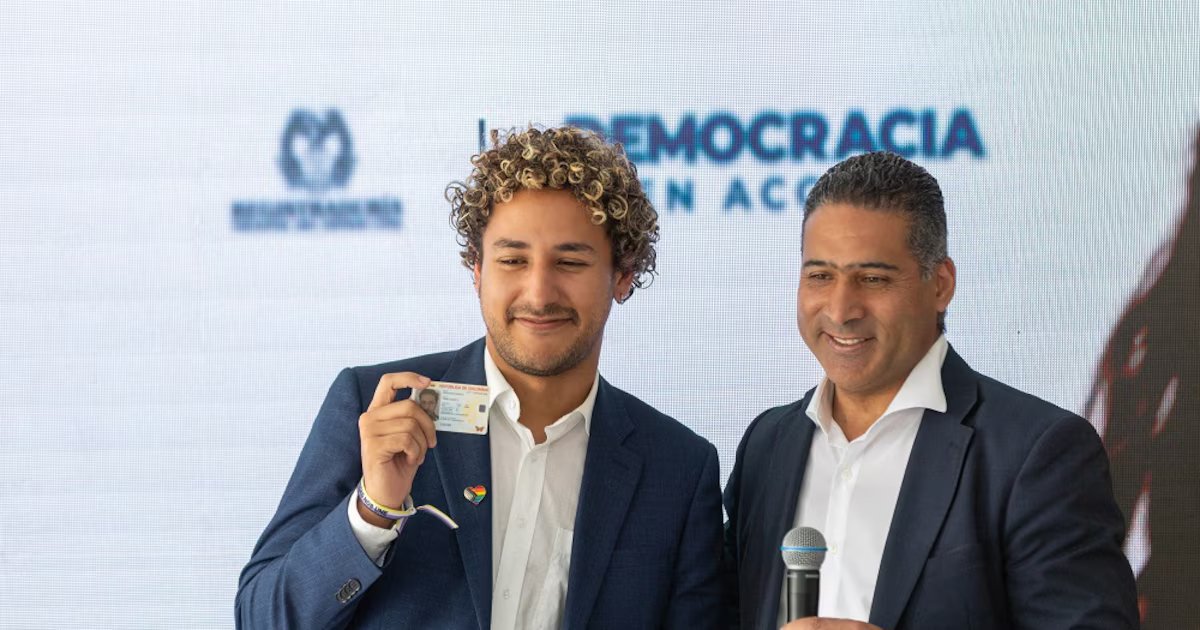
In November 2025, the National Registry surprised the country by announcing the introduction of the Trans and Non-Binary categories on citizenship ID for anyone who does not identify as male or female, marking a significant step towards equity and equality.
Now you can follow us on Facebook and on our WhatsApp Channel
Regarding this, Infobae Colombia spoke with Catalina Arias, a trans woman working for the Social Integration Secretariat, who explained the scope of this measure, the challenges that remain, and the plans to continue supporting the LGBTIQ community in Bogotá and across the country.
Infobae Colombia: How has the LGBTIQ community received the news from the Registraduría about including the Trans and Non-Binary categories in the ID?
Catalina Arias: This milestone was celebrated at the LGBTI House of Sebastián Romero, with citizens, organizations, and trans individuals participating, marking a historic moment. We reacted very positively. It was a gathering with the Social Integration Secretariat and the Registraduría, where individuals can now see the non-binary category on their documents, including civil registration, ID cards, and citizenship IDs.
This is a very positive advance because we are in a nation where people can identify through their documents, and it’s the first step towards guaranteeing rights in labor, social, educational, and health fields. Thus, the announcement made in November, launched from the LGBTI House of Sebastián Romero, was received with great enthusiasm.
We feel that this is a rewarding step forward with legal advancements that the State supports, and after many years of discrimination and violence endured by us, achievements like this are coming to light, which are significant for all citizens, especially for trans and non-binary individuals.

When did this process start, from the community’s perspective, to be identified by the gender they identify with?
This process has been gradual; various organizations have worked alongside district activists to ensure that these rights are increasingly supported. There is also a regulation – Decree 127 of 2015 – allowing trans individuals to change their sex designation in their identification documents, marking our progress.
With the Chuchú de la Cédula service, we progressed further initially on trans matters, and we have now included the non-binary component. We have been collaborating with non-binary individuals, and it is vital for the Registraduría to recognize the NB and trans categories, as previously only male and female existed.
For some, this might seem inconsistent or negative, but for us, it represents a fight spanning many years and decades, achievable today via these institutional alliances and state support.
Besides the ID, what other state processes or services still lack this category? For instance, in passports?
Currently, only civil registration, ID cards, and citizenship IDs reflect this change. I am not exactly certain about the passports. I believe that private organizations should adopt these changes as well. Some private companies have their own policies, but public organizations must incorporate NB and Trans in all their internal components.
From the Social Integration Secretariat, there was a similar initiative under the Reafírmate program, the Chuchú de la Cédula…
The name of the service may puzzle some individuals. It comes from trans slang used in the Santa Fe neighborhood, denoting something complicated or difficult. Trans women often employ this term in their daily language. Thus, we’ve reclaimed it to foster a connection and make it a service for ID identification, updates, aiming to attract citizens, particularly trans individuals, to the service.
Therefore, we chose this name because the process can be complex — changing your ID isn’t easy and requires not just economic support but also emotional backing. We feel this was the right term to encourage recognition and draw more people to the service. Since November, we have benefited 532 individuals, providing them with this ID through an alliance between the Social Integration Secretariat and the Registraduría, working together on all these platforms and communication campaigns.
We’ve reached out to communities using flyers and posters in public libraries across Bogotá, allowing individuals to scan a QR code to sign up and begin the process. Our interdisciplinary team consists of lawyers, psychologists, and social workers, as some trans individuals wish to pursue these changes but do not disclose this to their families due to anxiety.
The Chuchú de la Cédula consists of several steps: Initial registration via a form—filled with key details and personal information—then individuals visit LGBTI houses throughout the district. The second step involves obtaining the Birth Certificate, where this service is managed. The third step includes the support from the Subdirectorate for LGBTI Affairs to authenticate requests and provide declarations outside of court.
After that, individuals receive a public document, which they review and sign, formally indicating their desire to change their name and sex designation, and some adjust their numerical ID. They visit the Registraduría to request their updated records and password, which concludes the fifth step. The entire process takes three to five months, after which individuals receive their passwords.

In this effort, cases like that of Ms. Nieves Linares, who at 84 years old received her ID reflecting her identity as a Trans woman…
This story profoundly impacted me. I work in communications at the Chuchú de la Cédula and serve as a social communicator and journalist within the LGBTI Affairs Subdirectorate at the Social Integration Secretariat. We’ve been aware of Ms. Nieves’s situation through the team on the ground, who connect with local communities.
They informed us about Nieves Linares, an older trans woman of 84 years old, originally from Villeta, who moved to Bogotá at the age of 35 and was in pursuit of this process. Lacking knowledge, tools, and a cellphone due to her age, she faced communication challenges. Nevertheless, she approached a local territorial group, received the support needed, and was granted her ID in November.
Nieves embodies the entire struggle we’ve faced as trans women, showing that it’s never too late to update documents and embark on a transition. The experience was very emotional. She is fully aware of the achievements we’ve made, shedding tears of joy upon receiving her ID, living alone in Ciudad Bolívar, El Paraíso. Currently, she also benefits from community dining services due to existing vulnerabilities and her difficulty in securing stable employment.
She shared with me how she’s felt like a woman since childhood and worked in various labor-intensive roles. Upon moving to Bogotá, she sought freedom and began her transition, stating that Bogotá has given her everything, particularly the significant step of receiving her ID and being recognized for who she truly is, with a physical and legal affirmation.
Talking to her was an essential and touching experience. Recently, they honored her at the community dining center in Ciudad Bolívar, where she receives meals, celebrating her achievement with a cake adorned with her ID and the trans flag. She also has friendships within Ciudad Bolívar and continues to be a resilient woman who motivates us trans women. Thanks to her and the struggles she faced in the ’90s and ’80s, we can today affirm that discrimination is a crime and that the district supports us against all forms of violence, whether physical or psychological.

What barriers remain to be overcome by the community to continue progressing towards gender equity?
I believe several barriers still persist. For example, one major barrier is family support. Many families exclude trans individuals from their homes and communities. During this holiday season, having familial support is critical since family serves as the backbone for all individuals.
At the Social Integration Secretariat, we run a campaign called “Now You Need Them More Than Ever,” emphasizing that it’s never too late to support trans children. We need to tackle that barrier more vigorously, as there is much misinformation surrounding trans and non-binary individuals; family is crucial to anyone’s well-being.
Secondly, there’s the labor component. A person updates their identification document, receives their ID, and yet when they seek job opportunities in private companies, there are often barriers, misunderstandings, and discrimination. I personally experienced this during my transition; employers may not know how to properly approach or provide opportunities for a trans woman, often viewing it as complex.
Moreover, the healthcare aspect is essential for trans individuals. We require hormone treatments and surgeries, which involve intricate processes beyond simple appearances. There’s still misinformation regarding trans healthcare within medical facilities that creates barriers during transition and hormone processes. All trans women work actively to educate and sensitize, but often, we must navigate rights petitions and legal actions. This should not be necessary. Health insurance providers should have clear policies and ensure their staff are well-informed to avoid gaps in treatment access when a trans individual reaches out for care.
[ad_2]