[ad_1]

The Renewable Energy and Water Studies Center (Ceera) warned that the recent adoption of Decree 0044 by the national government could “dissuade investment, undermine the bankability of projects, and increase regulatory risk” in the electrical sector, as per the guild’s analysis.
The organization noted that the financial burden imposed on generators through the “solidarity energy contributions” established uniformly does not take into account technological, size, or economic capacity differences among producers. For Small Hydroelectric Plants (PCH), whose operational margins are quite narrow and face high sensitivity to regulatory changes, this measure poses a particular risk.
You can now follow us on our WhatsApp Channel and on Facebook
According to Ceera, Decree 0044 acknowledges issues such as high technical and non-technical losses, low revenue collection, investment deficits in infrastructure, and the prevalence of vulnerable users, but asserts that transferring the financial solution to generators may jeopardize the system’s sustainability.

While the guild acknowledged the necessity of ensuring the continuity of electric service in the current context, it warned that the new regulation increases uncertainty and could hinder the emergence of new projects. It emphasized that investment in electric generation requires significant capital and relies on regulatory stability and legal security, factors that the decree threatens by shifting the responsibility for covering structural deficiencies onto the sector.
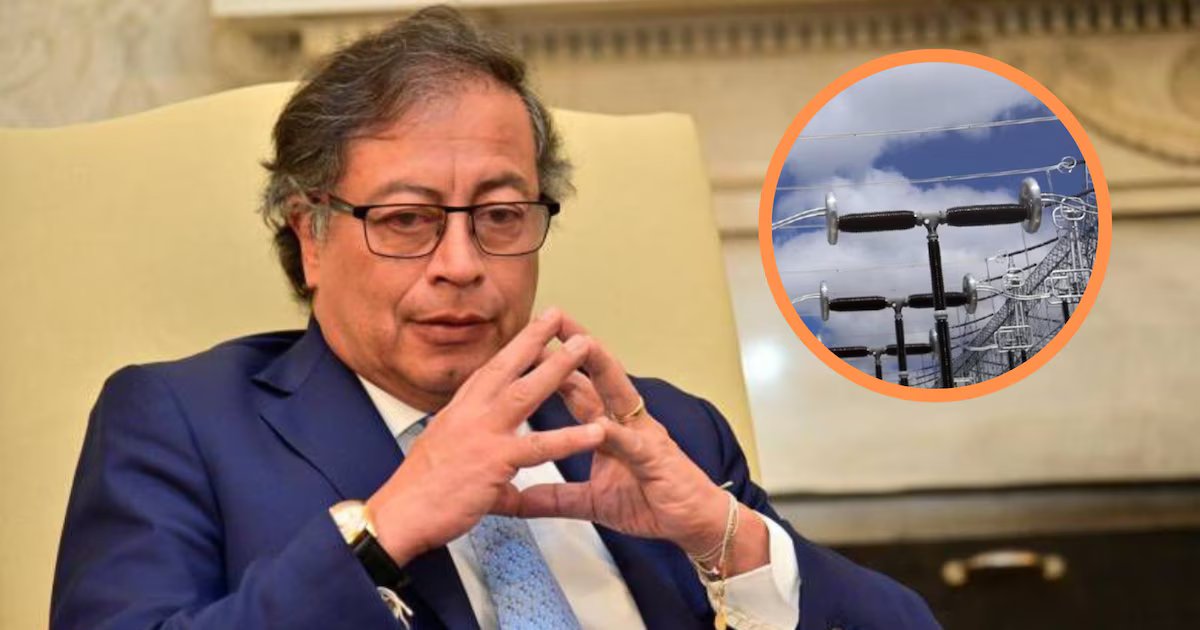
Following the alert from the Renewable Energy and Water Studies Center, President Gustavo Petro refuted the scenario presented by the guild on his social media. According to his analysis, the country has invaluable energy potential due to the climatic conditions in La Guajira department.

“There are no risks to generate electric energy in Colombia. Only the department of La Guajira has a potential of 60 gigas of clean solar energy annually (sic),” Petro wrote on his X account.
In parallel, he explained that Colombia does not have a high energy demand compared to its production capacity, allowing for future exports to other countries. “Colombia demands 20 gigas of energy annually. By harnessing solar radiation in La Guajira, we can boost both Colombia and Venezuela, and still have the potential to export,” he elaborated.

On January 22, 2026, the Colombian government suspended energy exports to Ecuador, marking a new phase in the diplomatic and commercial tensions between the two countries. Although President Gustavo Petro insisted on decoupling the measure from the recent tariff confrontation, interpretations persist that attribute the halt in electrical supply to a direct response to decisions made by the Ecuadorian government.
The immediate backdrop of the controversy stems from an announcement by Ecuadorian President Daniel Noboa, who imposed a 30% tariff on Colombian imports, justifying this decision by alleging Colombia’s inaction regarding drug trafficking along the border.
In a statement, Edwin Palma, Minister of Mines and Energy, established January 22 at 6:00 p.m. as the cut-off time for electricity sales. According to the presidential mandate, the rationale behind the measure is based on internal criteria: “As soon as we confirm that our electric supply is fully sufficient in the medium term, we will restore our service,” Petro affirmed in his message reported by local media.
While Petro emphasized that “we do not want this for the Ecuadorian people, our brotherly people,” statements have emerged from within the government that nuances this distance from the commercial conflict. In a prior stance, Minister Palma expressed:
“We reiterate our rejection of the unilateral measures imposed by the neighboring country’s government and trust that diplomatic paths and open dialogue can quickly resolve the differences between two brotherly peoples.” These remarks cast doubt on the official argument that the cessation of electrical supply is solely due to internal needs.
The root of the disagreement lies, according to Noboa himself, in what he perceived as a lack of cooperation from Colombia regarding border issues. To support the tariff, the Ecuadorian leader stated: “We have had multiple conversations with President Gustavo Petro, and in the border issue, we do not see any work from the other side,” as reported by local press. However, the situation worsened further when, just hours before the Ecuadorian announcement, Petro posted a message calling former Ecuadorian Vice President Jorge Glas a “political prisoner,” a gesture that generated discontent within the neighboring government.
[ad_2]