[ad_1]

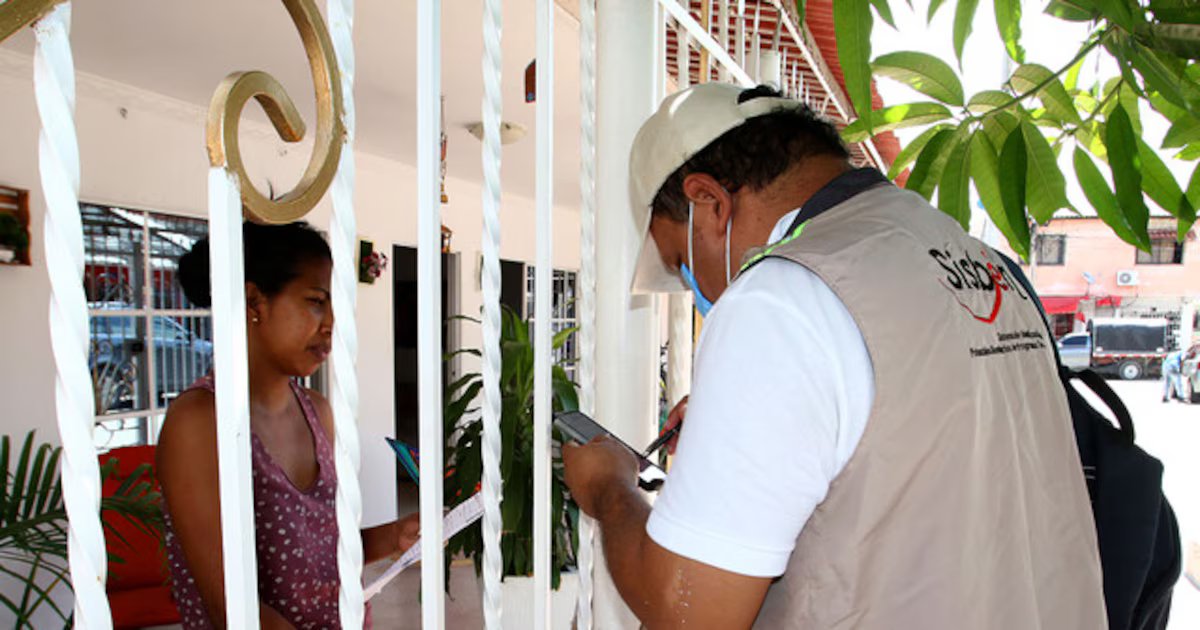
The Sisbén system has undergone changes in the classification of certain citizens due to a new process of automatic updating of socioeconomic information for households, as reported by Semana. These adjustments may affect access to government subsidies and social programs.
The National Planning Department (DNP), the entity responsible for managing the system’s database, stated that these variations are a result of a dynamic update model that crosses data from various public and private entities, aiming to more accurately reflect the living conditions of the population.
This mechanism allows for the verification of citizens’ socioeconomic information and adjusts classifications when changes in their economic or social situations are detected, according to the media outlet.

You can now follow us on Facebook and our WhatsApp Channel.
Sisbén is the system that the Colombian state uses to identify potential beneficiaries of social programs.
Through this mechanism, the government can focus subsidies and assistance aimed at the most vulnerable sectors of the population.
In recent months, some citizens have reported changes in their scores or the groups they belong to within the system.
According to authorities, these changes are part of an updating process designed to enhance the accuracy of the recorded information.
The National Planning Department explained that the system has begun incorporating an update model based on administrative records.
This means that household data is no longer reliant solely on periodic surveys.
Instead, information is cross-checked with databases from various public and private entities.

Among the records used are data related to health, education, employment, and other official systems.
This data cross-referencing enables verification of whether previously reported data aligns with the current socioeconomic situation of households.
According to the DNP, this mechanism aims to make the system more dynamic, facilitating quicker reflection of changes in citizens’ living conditions.
As a result of this process, some households may observe changes in their classification within Sisbén.
This occurs when the data cross-reference confirms, adjusts, or supplements the information originally reported in the survey.
Currently, the Sisbén IV system classifies the population into four main groups.
Group A corresponds to households in extreme poverty.
Group B includes individuals in moderate poverty.
Group C covers the population considered vulnerable.
Meanwhile, group D consists of those not in poverty or vulnerability.
This classification is essential for determining eligibility for various government social programs.
These benefits include monetary transfers, educational subsidies, housing support, and health care programs.

Thus, any adjustment in classification can cause anxiety among citizens.
Authorities have indicated that changes do not necessarily mean there are mistakes in the system.
In many instances, they simply reflect updates in data concerning income, employment, or other variables impacting socioeconomic assessments.
[ad_2]