
Colombia
Capturan a ‘Tito’, cabecilla de los Comuneros del Sur en Nariño: sería un gestor de paz designado por el Gobierno Petro

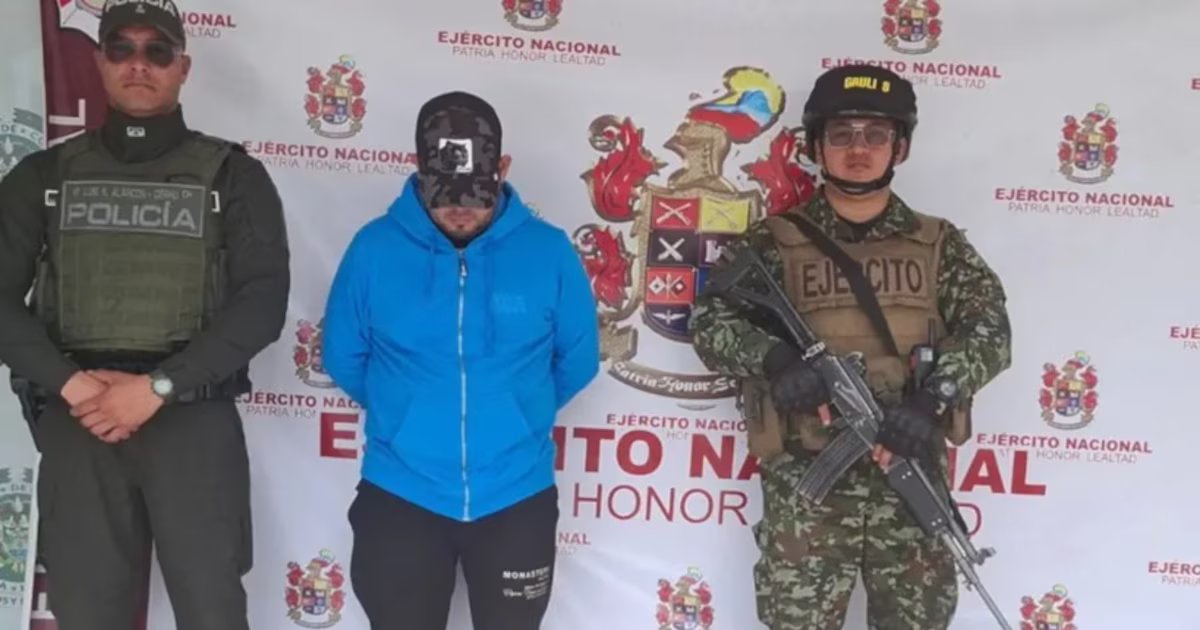
National Army and Police troops from Nariño have reported the apprehension of Luis Alberto Villota Rodríguez, also known as Tito, who is considered the third-in-command of the Comuneros del Sur Front, a faction that split from the National Liberation Army (ELN).
According to a report provided by the military institution to Blu Radio, the arrest occurred in the Korea of Remolinos district, a rural area of the Taminango municipality (Nariño, southwestern Colombia).
You can now follow us on Facebook and on our WhatsApp Channel
This individual reportedly has an Interpol blue notice against him and faces investigations for kidnapping, abuse, torture, and the murder of Jenith Andrea Rodríguez, a prominent youth leader from the Madrigal district in Policarpa municipality.
In relation to this case, authorities indicated a link to disputes within illegal structures. Social leaders and local communities reported that initial accounts suggest the young woman may have been murdered for having a romantic relationship with a member of the Franco Benavides front, associated with dissidents of the FARC under alias Iván Mordisco.

This context uncovers the presence of internal conflicts affecting community leaders and raises concerns regarding the protection of human rights defenders in the area.
Moreover, Villota Rodríguez is part of the negotiating team for the guerrilla front, currently engaged in peace talks with the Colombian government led by President Gustavo Petro.
The Prosecutor’s Office has suspended any consideration of immunity, despite this individual holding the status of peace facilitator, which contributes to tensions in the ongoing dialogue with illegal organizations.
Following his arrest, the man was taken directly to the Immediate Reaction Unit (URI) facilities in Pasto, the capital of Nariño, as the corresponding judicial procedures progress.
Authorities will assess his legal situation as questions about the continuation of peace talks involving the Comuneros del Sur Front arise following the capture of one of its recognized leaders. No statements regarding this have been issued by the Peace Commissioner’s Office.

Recently, a document was released indicating that the Executive has extended the permission for nine leaders of the Comuneros del Sur to maintain their status as peace facilitators to further the peace process taking place in southwestern Colombia, valid until August 2026.
Among the nine designated under this figure, outlined in resolution 043 from February 6, 2026, is Luis Alberto Villota Rodríguez.
Besides alias Tito, the list includes Ana Milena García Leiton, alias Sonia, who was sentenced to 40 years in prison for the kidnapping of a family in Jamundí, Valle del Cauca.

Additionally, the list includes Jaime Edilson Rodríguez Moreano, alias Yovany, linked to drug trafficking networks in Ecuador; Ómar Robinson Vallejo España, accused of murdering two police officers in Nariño; and Édgar Humberto Restrepo Benjumea, known as Mono Clinton, head of the urban front of the ELN.
The group is completed by Diego Fernando García, Jesús Andrés Cabezas, Yumer Arley Guerrero Castilla, and Carlos Jhon Cabrera Ruales. All participate in the negotiation tables with the Comuneros del Sur, where their role involves organizing the process and fostering humanitarian initiatives.
According to authorities, some of the designated individuals face pending charges or convictions for kidnappings, assaults, and homicides against members of public forces, as well as suspicions of active ties to criminal structures affiliated with the ELN.

The official document outlines that the peace facilitators are to contribute their knowledge and experience to the process. “The national government may withdraw the designation of peace facilitators at any time and, consequently, request the reactivation of ordinary penal measures,” the document states.
The governmental resolution requires all peace facilitators to sign formal commitments. They must appear before the courts when summoned, document their participation, and meet exceptional, temporary, and territorial conditions noted in the respective work plans.
Regarding the scope of these appointments, President Gustavo Petro has clarified that the figure of “peace facilitators” does not represent an automatic pardon. His intention is to have those in power within territories and who understand the armed reality actively contribute to the processes of dialogue and reconciliation, prioritizing the construction of peace during the remainder of his term.



