[ad_1]

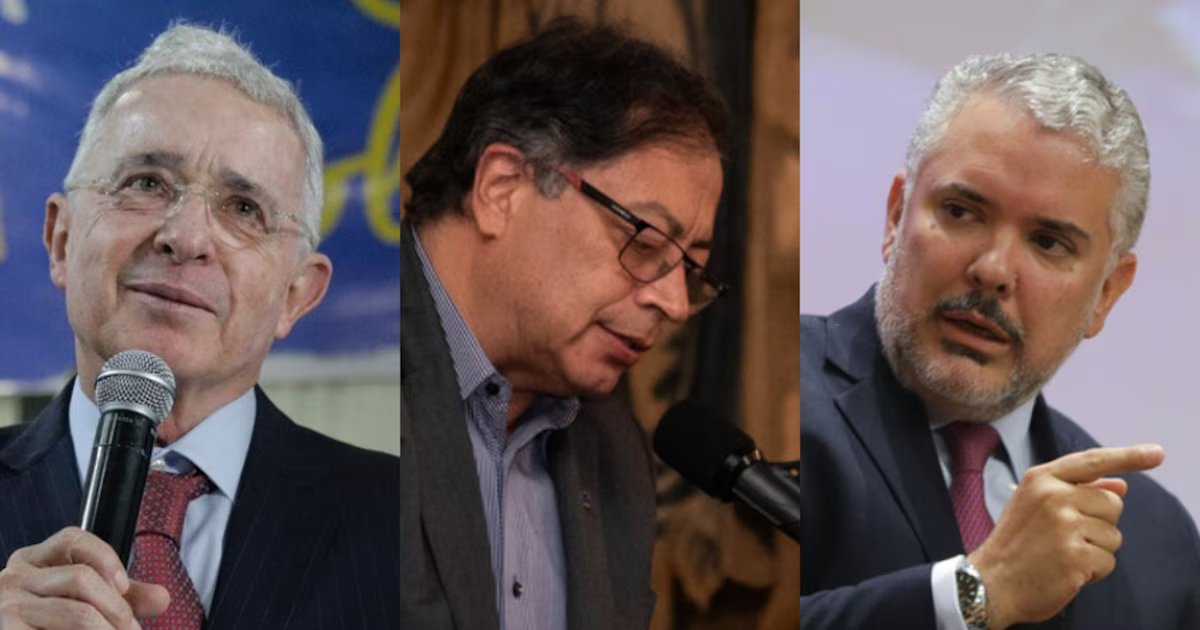
On January 12, through his social media platforms, President Gustavo Petro held former presidents Álvaro Uribe and Iván Duque accountable for decisions that he claims increased energy tariffs and shifted debts onto consumers. He affirmed that the Government will implement a temporary rise in the cost per kilowatt-hour, with impacts that will vary according to social strata.
Petro stated that during previous terms, especially under Uribe’s administration, an increase in distribution prices was authorized based on agreements with an overseas company. “Your friend Duque made a grave mistake: he froze the electricity tariff during COVID for all users, but not funded by the companies’ profits, causing debt that users had to repay,” the president expressed in his message.
You can also follow us on our WhatsApp Channel and on Facebook
Furthermore, the president reiterated that this debt has reached “six trillion” and indicated that he had attempted to cover it through the 2026 General Budget, but stressed that the initiative was blocked in the legislature. “Your party, Mr. Uribe, opposed that and undermined the two financing laws,” Petro remarked in his post on X in response to Uribe’s sharing of an article from Valora Analitik.

According to reports from the media, the Ministry of Mines and Energy released a draft decree proposing a “transitory charge” of $8 per kilowatt-hour for all demand on the national electric system. This measure aims to finance Air-e’s debt, a state-intervened public services company in the Caribbean, and to ensure the reliability of the sector in companies monitored by the Superintendency of Public Services.
The debt of Air-e, a provider, seller, and distributor of energy services, with generators is about $2 trillion. The decree suggests that while the Commission of Regulation of Energy and Gas (Creg) designs a new reliability scheme over the next six months, this additional charge will be implemented. The funds collected will be given to the stakeholders with whom Air-e has outstanding obligations.

Additionally, the executive’s plan includes a regulatory reform regarding “complementary firm energy.” The Creg, according to the information replicated in the news report, will have up to 18 months to accurately regulate the measurement and remuneration of wind and solar energy as backup sources in the national interconnected grid, aiming to diversify Colombia’s electric matrix.
The effect of the tariff adjustment will depend on the socioeconomic level of the households. “Not all Colombians will bear the cost, but it will vary according to their social strata,” Petro stated; however, the article notes that the official document does not clarify who will ultimately incur the expense, although in practice, marketers usually cover these amounts and typically pass them on to users through their monthly electricity bills.

In this regard, Ricardo Arango, manager of Afinia, warned about the financial risks if Air-e or similar companies continue to default on payments and indicated that “if it isn’t financially sustainable, a blackout risk could materialize.” On the other hand, sector experts like Camilo Mejía expressed uncertainty about the mechanism’s effectiveness and how financial stability will be ensured for the agents involved, based on media reports.
In the business context, the company Air-e announced that starting January 2026, the price per kilowatt-hour will remain at $796, below the average, and ensured it will maintain an $80 difference compared to other retailers, highlighting the stability of its rates. This mechanism aims to “alleviate pressure on users” by preventing the costs from inefficiencies from directly affecting their bills.
[ad_2]