
Colombia
Iván Cepeda reveló si piensa asistir a los debates presidenciales y explicó por qué lee sus discursos en eventos públicos

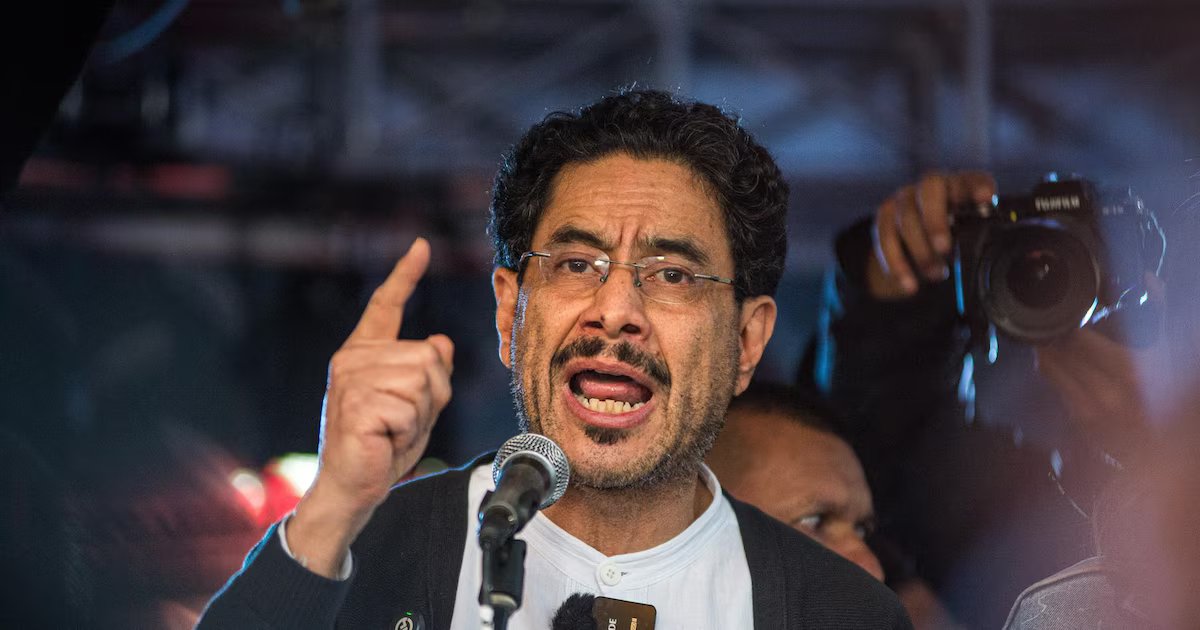
In his recent appearances at public events across the country, Iván Cepeda, senator and presidential candidate for the Historical Pact, has chosen to read his speeches rather than improvising, a move that distinguishes him from the tradition of spontaneous oratory in electoral campaigns.
Regarding this, Cepeda explained in an interview with Noticias Caracol that this practice aims to protect his campaign against unfounded promises and ensure an accurate documentary record of his government plan, available for community scrutiny.
You can now follow us on Facebook and on our WhatsApp Channel
The candidate justified his method by noting that reading his interventions aims to prevent the moment’s emotions from distorting the content of his political program.

“This is for several reasons. We believe that our program should be clearly established. So there are 50 events, 50 speeches, 50 elaborations that can be easily found to prove we are not engaging in rhetoric or demagoguery,” Cepeda affirmed. He added that each public intervention is summarized in a 200-page document containing specific proposals for different territories.
Cepeda, a philosopher and known for his extensive parliamentary career and opposition to former president Álvaro Uribe Vélez, dismissed the notion that this strategy reflects any weakness in oratory skills. He emphasized that his interventions in Congress have always been oral and unscripted. “This is not about a limitation in that area, but rather because I want to appeal to rigor and clarity of thought,” the senator stated.
During the interview, Cepeda addressed questions about his participation in presidential debates, especially after the repeated challenges from Abelardo de la Espriella, another candidate with a high intention of vote according to various polls.
Cepeda confirmed his willingness to debate, appealing to his experience in Congress, where he has made impactful interventions, recalling his address in September 2014 against then-senator Uribe.

However, he warned that he will only attend debates under clear rules, refusing to tolerate insults or slander: “Debates with clear rules and we will discuss arguments, proposals, and programs. Not about slander, insults, or rudeness, that’s not of interest to me.”
Regarding his government program, Cepeda expressed his commitment to continue the social policies initiated by President Gustavo Petro. He highlighted the progress in agrarian reform and stressed the importance of strengthening the peasant economy as a national driver.
“(…) it is necessary to continue advancing in the country’s agricultural growth, which has been one of this government’s successes. This government has a lot to show concerning the development of the agricultural economy. Thus, there will be a significant vector of social development,” he stated in the mentioned interview.
Additionally, he mentioned as priorities labor, pension, health, and educational reforms, as well as territorial development to address the backwardness and violence in historically marginalized areas.

“We will continue advancing in labor reform, in pension reform, of course. It’s necessary to further the health reform. It’s also essential to deepen educational reform. And, importantly, in this aspect is territorial development. We have struggled in certain areas of the country to generate a process of territorial transformation. I believe that is the cause not only for the backwardness of many territories but also the violence problem,” he emphasized.
The presidential elections in Colombia will be held on May 31, 2026. If no candidate receives more than half of the votes, a second round will occur on June 21, with the winner assuming the presidency on August 7, 2026.



