[ad_1]
The Government of Gustavo Petro issued Decree Number 1470 of 2025 on December 29, 2025, which sets the new value of transportation assistance linked to the increase in the legal monthly minimum wage for 2026. According to the provision, the adjustment is based on constitutional and legal powers, invoking Law 15 of 1959 and Law 4 of 1992.
This increase has profound economic, social, and political implications, both in terms of its amount and the expected effect on the labor market. In the regulation, the Colombian State argues that Article 25 of the Political Constitution recognizes work as a right and a social obligation that enjoys special protection, and that everyone has the right to work under dignified and fair conditions.
You can now follow us on Facebook and our WhatsApp Channel
To fulfill this mandate, the Government states that it must guarantee minimum material conditions for the effective exercise of this right. Additionally, Article 53 of the Constitution stipulates that the right to a minimum, vital, and mobile remuneration is a fundamental principle in labor matters. Therefore, the increase in the minimum wage is aimed at “preserving the purchasing power of labor income and ensuring real living conditions for workers and their families.”

At the same time as the minimum wage, the transportation assistance has a legal, non-salary nature, aimed at covering part of the daily commuting costs for those earning up to two legal monthly minimum wages.
Specifically, the decree states that “transportation assistance constitutes a legal non-salary benefit, intended to contribute to the partial coverage of commuting costs for workers from their place of residence to the workplace (…) when they earn up to two legal monthly minimum wages.”
For 2025, transportation assistance was set at $200,000, an increase of 23.46% compared to the previous year’s value of $162,000. Looking ahead to 2026, the Government indicates that “the National Government considers it necessary and convenient to set the transportation assistance for 2026 applying an increase of twenty-four point five percent (24.5%) compared to the 2025 value.”
As a result, transportation assistance will be $249,095 for 2026. Furthermore, the increase in the legal monthly minimum wage for 2026 is set at 23%, “motivated by constitutional, legal, economic, and social parameters, as well as an integral weighting of observed inflation, productivity, economic performance, the contribution of wages to national income, and the need to progressively advance in guaranteeing a minimum, vital, and mobile remuneration.”
The decree emphasizes that all these measures aim to “preserve the disposable income of low-income workers” and “mitigate the costs associated with daily commuting to work,” aligning with the principles of the International Labour Organization (ILO).
https://drive.google.com/file/d/1OORrGA12UujCQ0aUlU96Xoo-7UHmQ4XL/preview" width="640" height="480
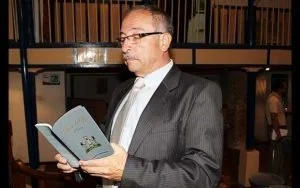
In response to the increase, lawyer Charles Chapman López, an advisor and well-known union leader, voiced strong criticisms against the Government of Gustavo Petro and the content of the decree.
He sees this adjustment as a direct threat to formal employment and a way to perpetuate labor informality. According to him, “the minimum wage decree is a fairy tale with a catastrophic ending, leading to more destruction of formal jobs, more Colombians without labor rights, without pensions, all to maintain power at the expense of the future of the Colombian people.”
The seriousness of his warning does not end there. He pointed out that the measure is bound to fail, as “it will lead to the greatest mortality of formal job positions.” In his analysis, he argues that the increase in the minimum wage and the proportional rise in transportation assistance make it harder for millions to transition to formal employment, especially for micro and small enterprises, which generate a significant portion of jobs in the country.
Through a video, Chapman was even more explicit in his remarks, stating that “once again, the Petro government turns its back on the most vulnerable in the labor market, the informal workers, those 13 million Colombians who currently lack basic rights and are condemned to not have pensions. The Government neglects them in its minimum wage increase decree, which further hinders their access to social security.”
According to his arguments, the minimum wage is “the gateway to social security.” Therefore, raising it without considering the local economic context and the informal business sector will hinder more workers from entering formal employment. “A higher minimum wage complicates the path to formality and also destroys formal jobs, especially in micro and small enterprises,” he insisted.

Chapman López cited international precedents to justify his alarm, stating “Let’s not forget that countries that followed this recipe now have no jobs and people have to migrate. For instance, Venezuela, Argentina—remember the hyperinflations there? Also Mexico itself, and that’s why informality has grown tremendously. After Colombia, which is the most informal country, Mexico comes second.”
In that sense, he denounced that the country is already a regional leader in informality and the minimum wage increase would only worsen the situation. “Let’s not forget that today we are unfortunately leaders in informality; that does not come without consequences.”
He called for action and political organization among private sector actors and workers, insisting that the true motive behind these policies is electoral. “Let’s not be deceived; this is a populist measure aimed at the 2026 elections. Therefore, our focus should center on that election in 2026. We must save Colombia from this populism.”
He added that we should not fall “for this siren song that was the minimum wage decree” and urged all sectors—private, workers, employers, and self-employed individuals—to engage in “active militancy” to prevent Colombia from facing Venezuela’s fate. “Let’s not let what happened to Venezuela happen to us; we’re not far from it. Don’t think they were less than us; they are just like us, and due to distrust, they lost their country. Here, it’s not too late. Please, everyone fight for Colombia and don’t be deceived by the poisoned sweets the Government wants to give us.”
[ad_2]