[ad_1]

PRESIDENCIA DE VENEZUELA
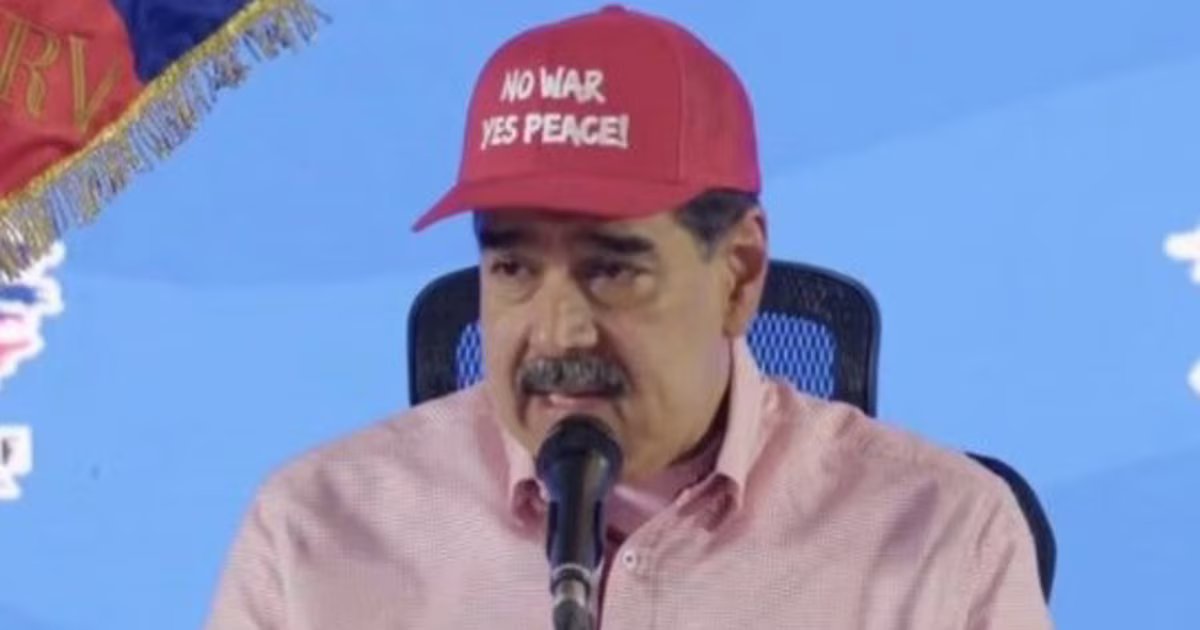
Nicolás Maduro addressed the public regarding the security situation along the Venezuela-Colombia border, criticizing President Gustavo Petro’s government for what he termed a lack of military and police protection at the bi-national boundaries.
The statements were made during an interview granted to journalist Ignacio Ramonet.
In his remarks, the Venezuelan dictator claimed that his administration has implemented an operational scheme that, as he asserted, has effectively confronted drug trafficking and transnational criminal organizations.

You can now follow us on Facebook and our WhatsApp Channel
Maduro asserted that the Venezuelan regime has developed an effective model for combating drug trafficking, while questioning the actions of the Colombian state in the border area.
“Venezuela has a model that I would describe as perfect in combating drug trafficking. Today, we pulverized the foreign drug trafficking plane number forty,” said the Venezuelan leader, referring to military operations conducted by his country’s Armed Forces. In that same context, he noted that these actions have been carried out under domestic air interdiction laws.
During the interview, Maduro focused part of his discourse on the length of the shared border with Colombia, which extends over 2,200 kilometers, stating that his government has allocated economic and logistical resources to maintain a permanent armed presence in that territory. According to his statements, Venezuela has invested “billions of resources” in deploying police, soldiers, and special operations.

“We dedicate billions of resources to deploy police, soldiers, and operations because the Colombian border is completely devoid of military and police protection,” Maduro stated. With this assertion, he held the Colombian government responsible for failing to exert sufficient control over its side of the border, which he believes forces Venezuela to assume security tasks unilaterally.
The Venezuelan regime leader also claimed that his administration has established three peace zones along the border with Colombia. According to his version, these areas aim to contain the actions of criminal structures and reduce the trafficking of drugs and arms. However, he maintained that there is no effective coordination with Colombian authorities. “We have created three peace zones along the two thousand two hundred kilometers of border with Colombia. But there is no collaboration from the Colombian side. So, we have to do all the work ourselves,” he added.

In another part of the interview, Maduro detailed figures on air operations carried out by Venezuela against alleged aircraft linked to drug trafficking. He indicated that, according to official records from his government, 40 planes that were reportedly coming from Colombia had been neutralized. “All forty were coming from Colombia… With the law in hand, the interdiction law, they were warned in advance, everything that needed to be done was done, and then bam bam boom, the Sukhoi rockets,” he stated.
The leader elaborated on this figure, asserting that his administration accounts for 431 aircraft linked to drug trafficking that would have been shot down in recent years. “Today we reached 431 foreign and Colombian drug trafficking aircraft shot down… With the law in hand. So, we have an exemplary and very effective model,” he noted during the conversation.
These statements occurred amid diplomatic and regional security tensions, marked by reciprocal accusations regarding the control of illegal economies in border areas. In this context, Maduro also commented on his government’s relationship with the United States, despite the deployment of American military forces near Venezuelan territory.
The leader expressed his readiness to engage in discussions with Washington about cooperation in the fight against drug trafficking. “I believe we need to set all that aside and start serious conversations, with data at hand, and the U.S. government knows this, because we have communicated it to many of their spokespeople, that if they want to have a serious conversation about an agreement against drug trafficking, we are ready,” he stated.
Hours before the interview was aired, the Venezuelan Ministry of Penitentiary Services announced the release of 88 people detained during the post-electoral protests of 2024. This group was joined by another 99 individuals released under precautionary measures on December 25, although non-governmental organizations such as Penal Forum indicated that only 61 cases could be verified at that time.
[ad_2]